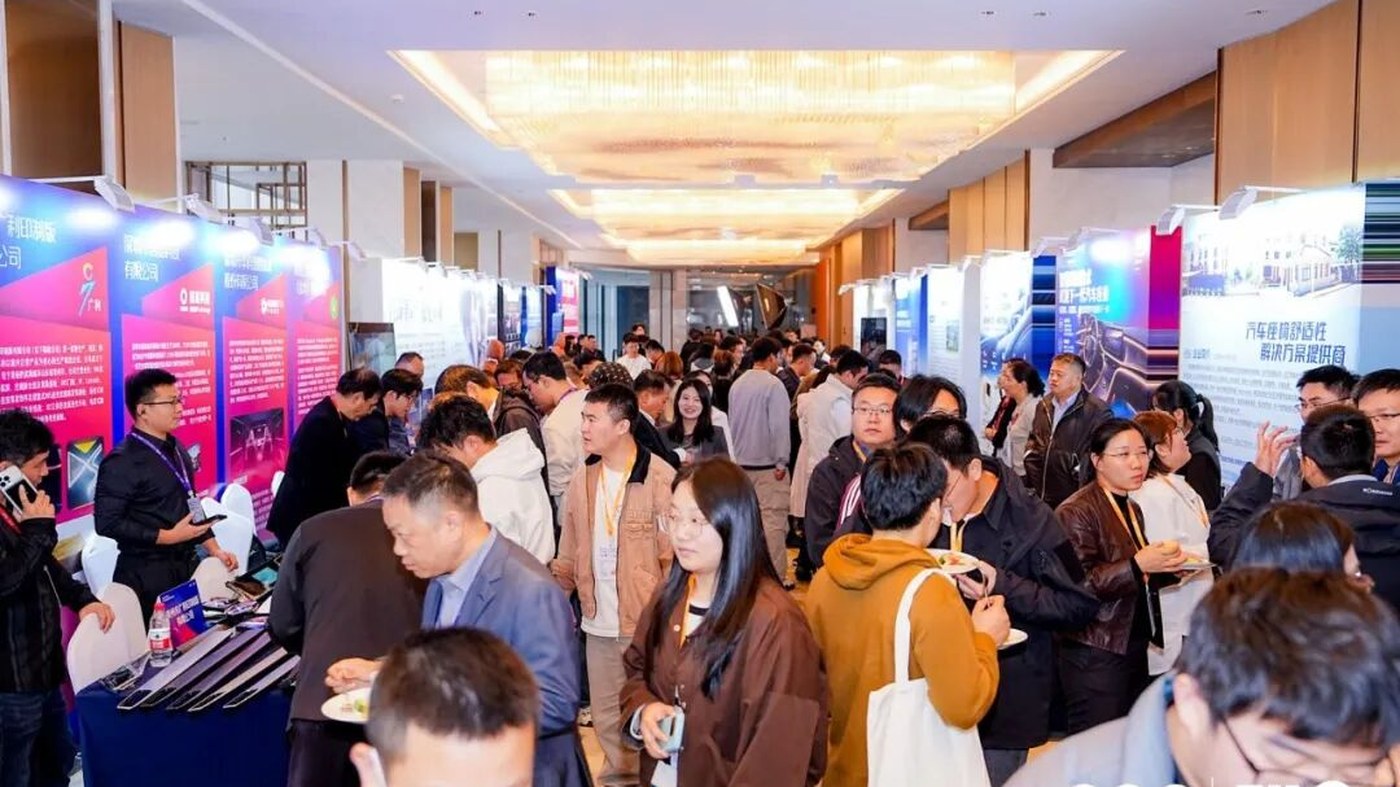
On 13 November, Yang Shixin, Chairman of Zhengdaming Cultural Industry Group, was invited to the EAC Next-Generation Cockpit Scenario Innovation Forum in Shanghai, where he delivered the talk "Chinese Lacquer in Automotive CMF: Design and Application", discussing with 600+ OEM and supply-chain professionals the prospects of traditional Chinese raw lacquer as a premium surface material for smart cockpits.
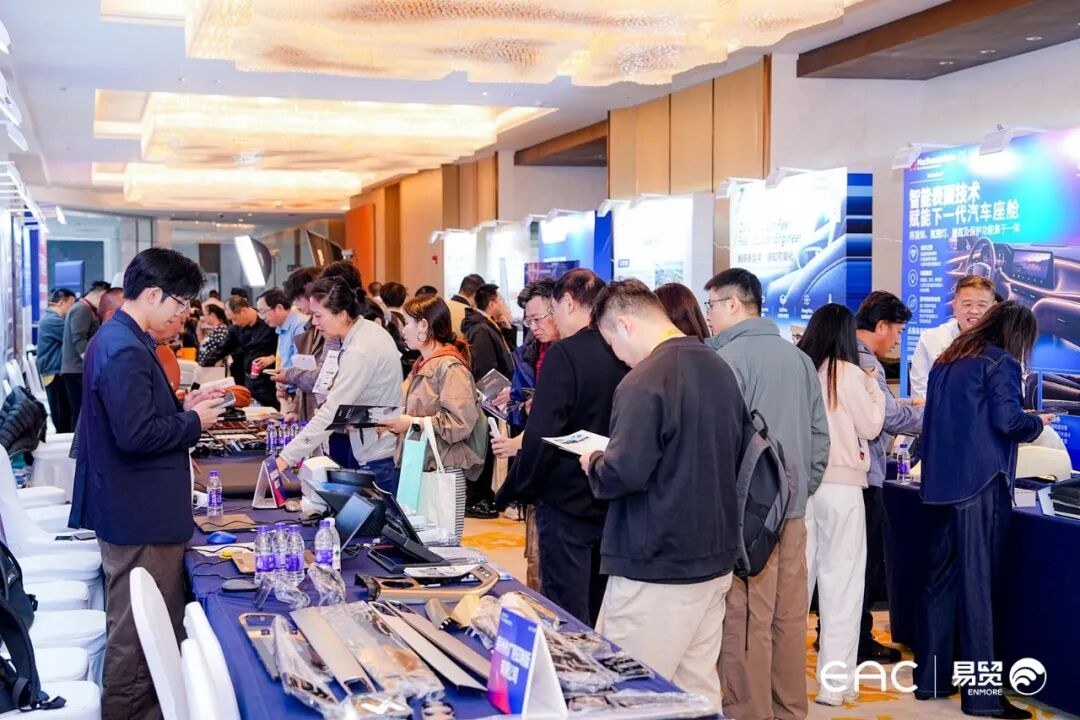
A Yearly Gathering of the Cockpit Industry
The forum brought together 32 speakers and 200+ innovative exhibits. Delegations from Xiaomi, Xpeng, NIO, Li Auto, Chery, Seres, Geely, Changan, SAIC, Dongfeng, PATAC, FAW and other OEMs attended, covering chief engineers, cockpit architects, forward-looking technology experts, CMF colour & texture designers and materials engineers. AI cockpits, multi-sensory experience, smart surfaces and CMF materials were the most discussed topics of this edition.
Redefining Lacquer as a Surface Material
"We are not moving a traditional craft into the car — we are redefining Chinese lacquer as a surface material for premium Chinese automobiles." With this opening statement, Yang Shixin set out the core proposition: beyond the European material language of carbon fibre for sport, aluminium for technology, wood for heritage and Nappa leather for luxury, premium Chinese brands need a surface coating language "with Chinese roots, material depth and visual identity" — and lacquer fills exactly that gap.
Why Lacquer: A Surface Material Validated over 8,000 Years
Lacquer's engineering credentials go back 8,000 years: the lacquered bow unearthed at the Kuahuqiao site in Xiaoshan, Zhejiang (c. 8000 BP) is the earliest lacquer object known to the world; the red-lacquered wooden bowl of Hemudu (c. 7000 BP) established the red-and-black oriental palette; and the Ming-dynasty Xiushi Lu remains the world's only ancient monograph on lacquer craft — codifying materials, procedures and quality control as "engineering thinking" long before modern industry. A lacquer tree takes 8 years to mature and yields only 10-15 g of raw lacquer per tree per day, tapped before 6 a.m. — nature's limited gift, and the very scarcity that grounds a premium material narrative.
Four Craft Series, Four Moods for the Cabin
- Transparent overlay (Zhaoming): transparent lacquer over different grounds — gold-bug, ruby-sand, hidden gold, hidden carving — with light shifting by angle; understated luxury for flagship models. Hongqi HQ9 already applies the ruby-sand technique, proving lacquer can go into cars;
- Lacquer × micro mother-of-pearl: iridescent "galaxy" shimmering on deep-black lacquer, highly complementary to the lighting language of EVs — a fit for "tech-luxury" positioning;
- Plain lacquer + gold inlay (Qiangjin): fine gold lines — fret, cloud-thunder or bespoke brand motifs — on pure lacquer grounds, matching today's "New Chinese" CMF trend;
- Maki-e: gold and silver powders sprinkled into lacquer into one-of-a-kind patterns — a scarcity narrative for limited and bespoke editions.
Textures Can Be Random, Quality Cannot
The core of industrialising CMF is turning the "random variables" of traditional craft into standards: randomness belongs to aesthetics only, while every quality step is standardised — Master Sample anchoring each production batch, full digitalisation of temperature, humidity, coating thickness and drying time, three-tier inspection (visual, optical, performance), and batch traceability back to the lacquer batch, artisan and process record. Craft is offered in three tiers — standard, refined and master — matching mainstream, mid-to-high-end and limited-edition models respectively.
Placement and Roadmap: From Concept Cars to Series Options
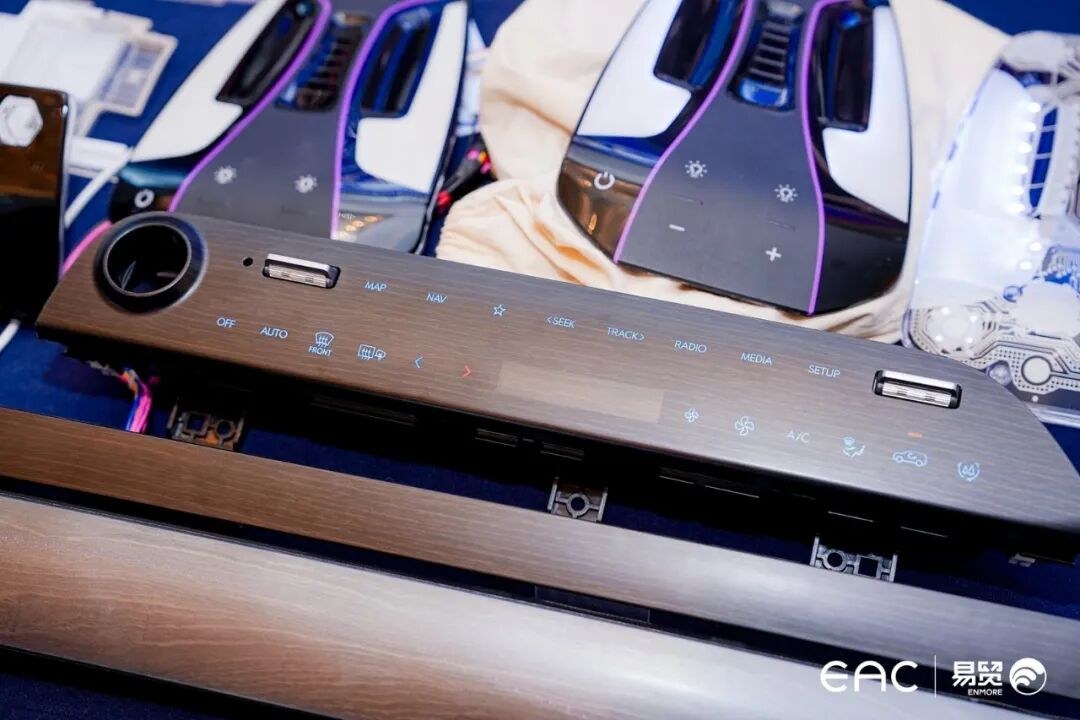
Lacquer can enter the cabin at five levels: centre-console trim, instrument panel, door panels, steering-wheel accents, and small items such as key fobs and emblems. The recommended first step covers the centre console and its surrounding panel — visual focus and touch focus in one — while low-cost items such as key fobs can go to market first to warm up perception. The cooperation roadmap has three phases: validation via concept-car debuts at motor shows, limited-edition options collecting real user feedback and durability data, and finally entry into the regular options list of premium models as a signature CMF language — serving premium brands only, concentrating resources on doing one thing to the top.
A Complete Chain from the Qinba Mountains to the Auto Factory
Behind the talk stands Zhengdaming's 12-year full industrial chain in the Qinba mountains: 5,000+ mu of lacquer-tree plantations across Ankang, Enshi, Chengkou, Shangluo and Zhuxi, 600+ jobs through the "company + cooperative + farmer" model, five corporate entities covering cultivation, tapping, refining, lacquerware and automotive CMF materials, and joint R&D with CAS, the Xi'an Raw Lacquer Research Institute, Tsinghua University and Northwest A&F University. Cross-over achievements are already validated: a lacquer × 3D-printed smart eyewear won the 2025 German iF Design Award, and collaborations such as DITA gold-inlay earphones and Maogeping lacquer-pearl jewellery have reached commercial scale.
For more industrial lacquer coating solutions, please visit Industrial Solutions; for the full forum report, read "EAC Next-Generation Cockpit Forum Concludes" (repost).
Let Chinese Lacquer Be Seen by the Times, Again
From the Zhengdaming trade house founded in 1925 around Niuwang lacquer, to today's CMF discussion in the automotive industry, the scenarios have changed while the faith in this craft remains. When lacquer meets the smart cockpit, the dialogue between traditional craftsmanship and modern industrial design has just begun. We look forward to working with more OEMs and Tier-1 partners, so that Chinese lacquer continues to be seen by the times in its next century.